
Spanish · verb conjugation

Spanish Verb tener: to have, to hold is tener
3 min readThe Spanish for have, hold is the irregular Spanish verb tener.
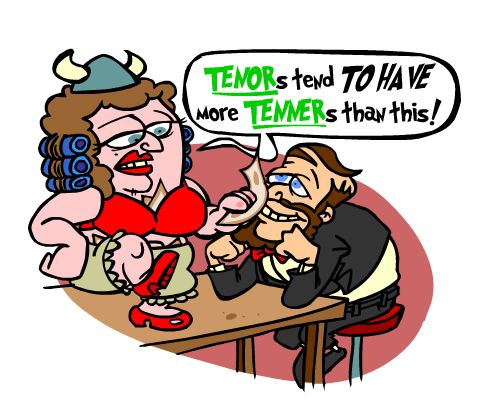
Imagine the TENOR HOLDS a TENNER! (*tenner = English ten pound note.)
to have, hold

tener
Sounds like “tenor holds / tenner”, so imagine…
the TENOR HOLDS a TENNER
Tener is an irregular -IR verb, and one of the ten most important verbs in Spanish. It has a few quirky conjugations - like most of the important verbs. Words conjugated the same way are: abstener, contener, detener, entretener, mantener, obtener, retener, sostener. Tener has so many different uses. It is used to:
- indicate possession, ownership
- construct many idiomatic expressions
- show obligation (I need to ... I must... = tener que)
- express how old you are... ( more below ...)
Visual Memory Triggers help you remember new words. Just think of the pic!
| VERB CONJUGATION TABLE tener | ||||||
|---|---|---|---|---|---|---|
| Simple Tenses - Spanish Verb tener | ||||||
| Tense | yo | tú | él | nosotros | vosotros | ellos |
| PresentPresentehave, hold | tengo | tienes | tiene | tenemos | tenéis | tienen |
| ImperfectImperfectohad, held | tenía | tenías | tenía | teníamos | teníais | tenían |
| PreteritPretéritohad, held | tuve | tuviste | tuvo | tuvimos | tuvisteis | tuvieron |
| FutureFuturowill have, hold | tendré | tendrás | tendrá | tendremos | tendréis | tendrán |
| ConditionalCondicionalwould have, hold | tendría | tendrías | tendría | tendríamos | tendríais | tendrían |
| SubjunctiveSubjuntivomay have, hold | tenga | tengas | tenga | tengamos | tengáis | tengan |
| Imperfect SubjunctiveImperfecto de Subjuntivomay have, hold | tuviera | tuvieras | tuviera | tuvieramos | tuvieráis | tuvieran |
| tuviese | tuvieses | tuviese | tuviésemos | tuvieséis | tuviesen | |
| Imperatives Spanish Verb tener | ||||||
| Imperative*Imperativohave! hold! | – | ten! | tenga! | tengamos! | tened! | tengan! |
| Negative Imperative*Imperativo Negativodon't have, hold! | – | no tengas! | no tenga! | no tengamos! | no tengáis! | no tengan! |
| Compound Tenses of the Spanish Verb tener Past Participle: tenido | ||||||
| Present PerfectPerfecto de Indicativohave had, held | he tenido | has tenido | ha tenido | hemos tenido | habéis tenido | han tenido |
| Preterit PerfectPretérito Anteriorhad had, held | hube tenido | hubiste tenido | hubo tenido | hubimos tenido | hubisteis tenido | hubieron tenido |
| Past PerfectPluscuamperfectohad had, held | había tenido | habías tenido | había tenido | habíamos tenido | habíais tenido | habían tenido |
| Present Perfect SubjunctivePresente perfectohave had, held | haya tenido | hayas tenido | haya tenido | hayamos tenido | hayáis tenido | hayan tenido |
| Future PerfectFuturo Perfectowill have had, held | habré tenido | habrás tenido | habrá tenido | habremos tenido | habréis tenido | habrán tenido |
| Conditional PerfectCondicional Perfectowould have had, held | habría tenido | habrías tenido | habría tenido | habríamos tenido | habríais tenido | habrían tenido |
| PluperfectPluscuamperfectomay have had, held | hubiera tenido | hubieras tenido | hubiera tenido | hubiéramos tenido | hubierais tenido | hubieran tenido |
| hubiese tenido | hubieses tenido | hubiese tenido | hubiésemos tenido | hubieseis tenido | hubiesen tenido | |
| Progressive Tenses tener Present Participle: teniendo | ||||||
| Present ProgressivePresente Progressivoam having, holding | estoy teniendo | estás teniendo | está teniendo | estamos teniendo | está teniendo | están teniendo |
| Preterit ProgressivePretéritowas having, holding | estuve teniendo | estuviste teniendo | estuvo teniendo | estuvimos teniendo | estuvisteis teniendo | estuvieron teniendo |
| Imperfect ProgressiveImperfectohad been holding | estaba teniendo | estabas teniendo | estaba teniendo | estábamos teniendo | estabais teniendo | estaban teniendo |
| Future ProgressiveFuturo Perfectowill be holding | estaré teniendo | estarás teniendo | estará teniendo | estaremos teniendo | estaréis teniendo | estarán teniendo |
| Conditional ProgressiveCondicional perfectowould have been holding | estaría teniendo | estarías teniendo | estabría teniendo | estaríamos teniendo | estaríais teniendo | estarían teniendo |
| Subjunctive ProgressiveSubjuntivomay have been holding | que ~ teniendo | que ~ teniendo | que ~ teniendo | que ~ teniendo | que ~ teniendo | que ~ teniendo |
* No imperative for yo: commands are only given to the people you're talking to (or to “us”).
Red letters are irregular: where tener breaks the regular pattern.
MORE on the SPANISH VERB tener
Aquí tiene!
Here you are! (giving something to someone)
Tenemos carne.
We have meat.
Tienes mucho de tu madre.
You look like your mother.

¿Cuantos años tienes? How old are you?
Tengo treinta años.
I am thirty (years old) - lit. I have 30 years.
Tengo hambre.
I am hungry - literally, I have hunger.

Tener que
To have to; must
Tengo que ir / trabajar! I must go/work!
Tiene cosas que hacer.
You (formal) have things to do.
HOW TO CONQUER SPANISH VERB CONJUGATION
- The Spanish verb for have tener is an irregular IR verb, so you need to learn the conjugation.
- Learn to conjugate tener and reinforce the pattern.
- Do a series of other IR verbs every day for a month and you will have a solid knowledge of the IR verbs' conjugation patterns. Keep doing them with a new one every day from the Spanish Verbs List.
- The same applies to the various patterns. Each month we feature a daily verb from one of the major pattern groups.
- Repeating these tables aloud 10 times throughout the day will better embed the patterns into your subconscious, and your long term memory.
- Reciting aloud is a great way for you to practice your pronunciation, and helps you to memorize the conjugations.
More Verbs like the Spanish verb tener - to hold, have - tener
- There are many more Spanish Verb Tables like this one.
- You can more easily remember words and verbs like the Spanish for have tener using the techniques of the world's Memory Masters.
MORE on SPANISH VERB, VOCAB and GRAMMAR LEARNING



ALSO ON SIMILAR SPANISH GRAMMAR TOPICS
Enjoy your Spanish verb tener learning.
Try 200 Words a Day
Stop forgetting what you learned yesterday
Each word comes with a cartoon memory trigger that locks it into long-term memory. Try 10 lessons free in every vocab course.