About us
We’re here to make language learning a laugh
200 Words a Day is here to make learning foreign languages enjoyable again. Using humour, cartoons and the odd innuendo, we aim to help language students of all levels learn vocab more quickly than they ever thought possible (and without the usual boredom that makes them want to quit!)


The 200 Words a Day story
How we tore up the textbooks to make language learning better
Dear language learner,
I know what it is like trying to learn a language.
When I was 11, I went to a boarding school in New Caledonia.
Nobody at the school spoke English, so in that total immersion situation I was soon chattering away in French, as a kid does… and I was writing my diary in French.
I discovered that vocab is so important
We all know that children learn so much faster than adults, and disregard all the rules and mental barriers that adulthood brings. In no time the child is thinking, and dreaming in the new language, and doing mental maths in it.
After some months when my parents visited, I was so out of practice it took a while to get speaking and thinking again in English mode!
Looking back, what got me chattering away wasn’t grammar lessons. It was being surrounded by thousands of words, all day, every day.
Vocab was what held everything together - the grammar kind of just figured itself out the more I used the language.
But learning vocab as an adult is boring as heck
In my thirties I decided to learn some German, my wife being fluent.
I dived in, taking the traditional route - textbooks, audio courses, the lot - and soon ground to a halt.
Trying to learn long lists of words through rote memorisation… painful!
The learning was boring. It was dry. It was difficult. It was not fun.
I could barely get any words to stick. And without many words, I struggled to communicate, even though I was putting in the hours.
That’s when it hit me again: vocab is everything.
Then I discovered the secret methods of memory masters
Then, as I was trawling the early internet for better ways to learn German, I came across Paul Daniels’ Magic Language Memory Method.
You might remember Paul Daniels as the BBC’s favourite TV magician (“You’ll like this… not a lot, but you’ll like it!”). Less well known: he’d used memory techniques for years.
On a 1988 BBC show he learned Spanish with them at over 700 words a week, enough to present half the programme in Spanish. His cassette courses were built with psychologist Dr Michael Gruneberg, using Gruneberg’s Linkword method.
It was the first time I had come across how the great memory masters of the world learn languages, and it re-sparked my interest and enthusiasm for learning German.
The memory masters teach us that the secret to remembering something is to see it in your mind’s eye, in a crazy scene. It is a technique thousands of years old, used by the Ancient Greeks, Arabs, and many ancient cultures.
So to learn a foreign word you use word association - a pun, a double entendre - basically, an English word or phrase that sounds like the foreign word.
Then you picture a (usually ridiculous) scene that ties the sound-alike to the meaning. Think of the scene, and it triggers the word in your memory: a memory trigger.
For example, the French for boat is le bateau, which sounds like “bat tow”. So you might imagine a bat towing a boat. And because bateau is masculine, the course would have you picture a boxer in it.
But something was missing…
The course was audio only. They would describe each scene, and you had to picture every one yourself. Some scenes stuck. Plenty didn’t.
Gender was only partly covered too. Every masculine word got a boxer, and every feminine word got a little girl.
That’s fine for ten words. But after a while you end up with hundreds of words with boxers and little girls, making it difficult to remember any genders or words at all! Was it the boxer in the boat, or the boxer with the mug?
So we added a few things to make each word much easier to remember
That’s when I realised: for the method to work for lots of words, every trigger has to be unique. So we took the memory masters’ method and made two big changes:
- We used different characters. Sometimes a famous face: a movie star, a historical figure, an angry horse with a hat. Something that sticks out in your mind and carries the word’s gender at the same time.
- We drew it for you. We turned every scene into a cartoon, so you don’t have to picture it yourself.
We also doubled down on making each scene more unique…
- The more vivid the visualisation,
- the more action,
- the more colour and spark,
- the more crazy,
… the easier it is to recall.
Remember the boat? Here it is the 200 Words a Day way:
boat
le bateau
Sounds like “bat tow”, so imagine…
Getting towed in a boat by his pet BAT is Count Dracula, who is getting a BAT TOW!
And it worked! Words that wouldn’t stick before now did with pictures.
Learning German was fun again.
We created cartoons for 1000s of words for French, German, Spanish and Italian
Once I’d seen how well it worked, I wanted everyone to be able to learn this way.
So we set about doing it for thousands of everyday words, in French, German, Spanish and Italian.
So instead of having to spend all those hours thinking of visualisations, you can just look, laugh and remember.
And with our in-built scheduling and testing systems, you can make sure you’ve really learned the words.
No more long lists. No more rote memorisation.
200 Words a Day puts the fun back into learning: lots of vocab, in much less time, without the headache.
I’m excited to hear how you find it.
Best,
 Kevin CrocombeFounder & Creator
Our values
Learning doesn't have to be serious
Some say learning only counts if it's hard work. We think that's why so many people hate school. As Kevin puts it: “Learning is so much easier if it is not serious.”
Silly is allowed
Someone once told Kevin our cartoons were childish. His reply: “Hey, guess what - he is right!” We'll take a daft picture you can't forget over a sensible list you can't remember.
By learners, for learners
We're not programmers who picked languages as a business. We're language learners sharing the methods we came up with ourselves, and still use to get better at languages.
Get out and explore
With the right tools, learning a language is a wonderful journey instead of a miserable one. The words are just the start: go and use them out in the world.
Our team
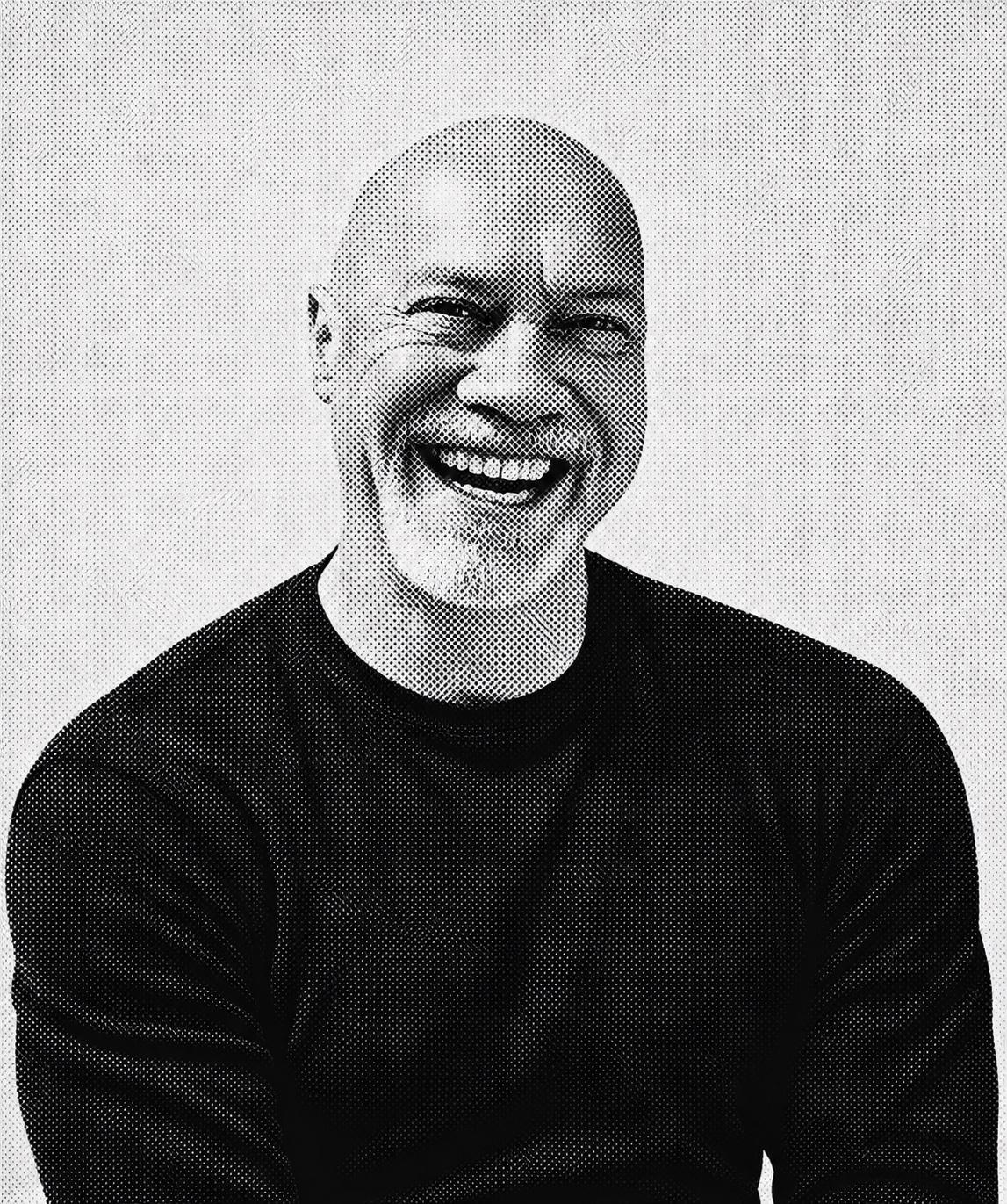
Kevin Crocombe
Founder & creator
Fond of all languages, Kevin learned French while living in New Caledonia as a kid. Thanks to this he is well placed to know that learning a language must be a game, an adventure, fun...
As an adult he's tried his hand at German, Spanish, Italian and Korean, and knows enough to get a laugh in languages as far and wide as Russian, Bahasa Indonesia and Cook Islands Māori.
A great believer in learning vocab not by endless repetition but by efficient memorisation and visualisation, he built 200 Words a Day so others can learn that way too.
Speaks
- FrenchTrès bien
- SpanishPoquito...
- Korean조금
 Korean
Fun facts
- An airline pilot who flies around Europe and gets to use his new phrases on the job.
- Grew up in New Caledonia and Fiji, and picked up every swear word going in Fijian and Hindi.
- Organised an air show at Auckland International Airport in 1992 that drew over 100,000 people.
- Once owned kiwifruit orchards.
- Writes Memory Triggers on the road, from Jakarta to a train in Belgium.
Favourite trigger
wound
la herida
Sounds like “hairy duck”, so imagine…
A HAIRY DUCK has a wound from a shooter's shotgun blast.
Tom White
Technology
Our original IT whizz, Tom developed and built the original 200 Words a Day software from scratch with his bare hands - long before apps, smartphones and wifi were even a thing! Hailing from Newcastle, UK, Tom is a lifelong football fan and enjoys playing bridge in his spare time.
Speaks
- Geordie
Favourite trigger
keyboard
el teclado
Sounds like “tech lad”, so imagine…
At the keyboard is a high-TECH LAD, who can TICKLE A DOzen keys in a flash.
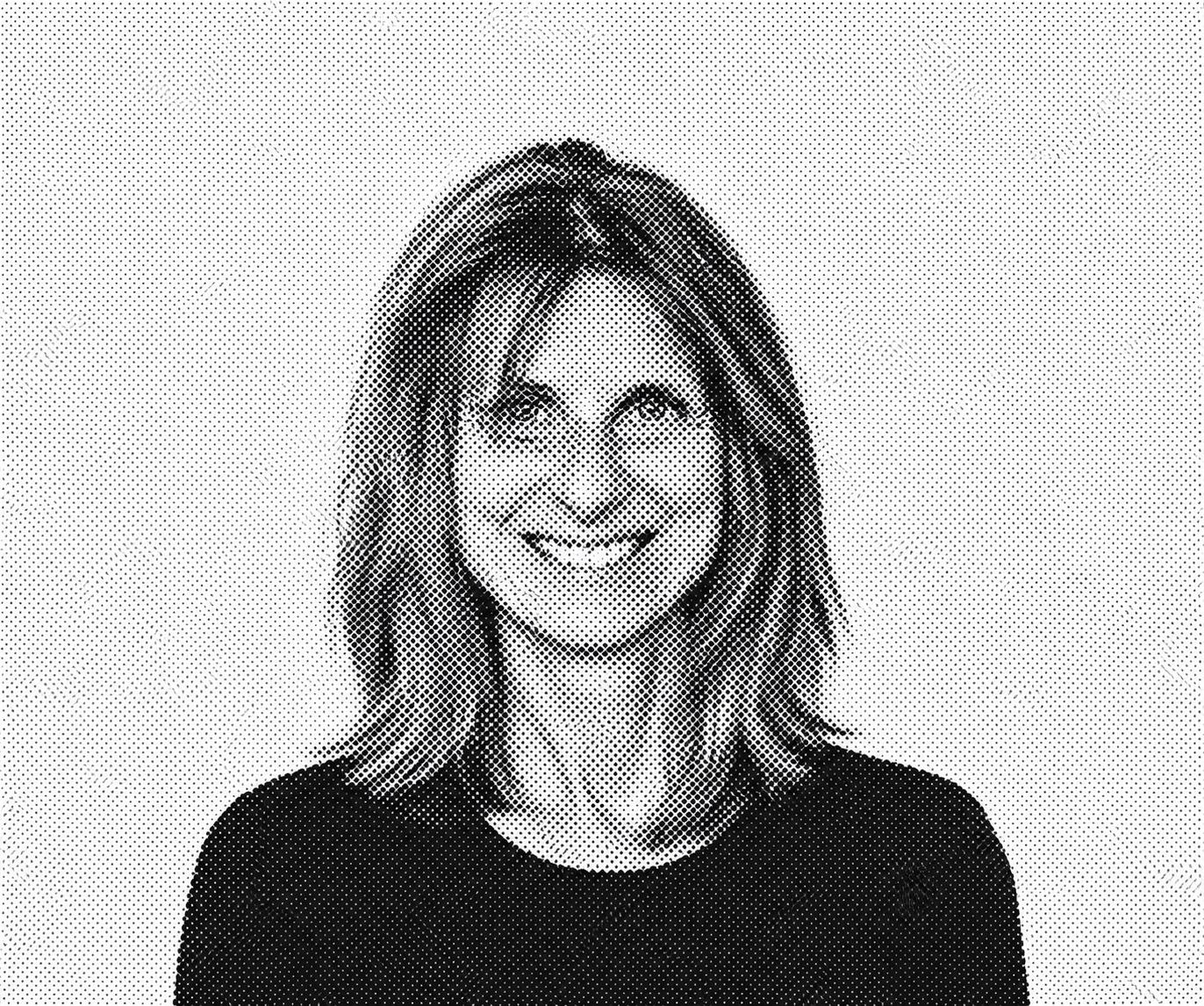
Odette Crocombe
Operations
Odette has always “swum” in languages: brought up on English and Swiss German, she studied Spanish at uni and qualified as an ESL teacher in the UK. As a young Kiwi she travelled solo as far as Argentina, Kenya and Switzerland, and came home convinced that a language means nothing without its culture. She's had a particular fondness for South America ever since.
Speaks
- Swiss German
- Spanish
- French
Favourite trigger
to wash
lavare
Sounds like “lovers / lava”, so imagine…
LOVERS love to wash dishes in LAVA.

Ryan Crocombe
Design
Ryan is responsible for taking the original 200 Words a Day software and redesigning it for the modern learner. Passionate about languages, culture and learning innovation, Ryan has lived in over 10 different countries across 4 continents, and speaks and reads Mandarin Chinese.
Speaks
- Chinese
Favourite trigger
unemployment
le chômage
Sounds like “chum age”, so imagine…
Donald Tramp's unemployment has made him and his CHUM AGE a lot quicker than normal.
 Swiss German
With special thanks to our contributors
The language specialists, artists, voice talent and testers from around the world who helped bring every word and Memory Trigger to life.
Languages & content
Spanish
 Eduardo Aceto
 Carlos Alvarez
- Mariana Averza
 Ladis Beeharry
- Isabella Campagna
- Santiago Nahuel Julian
- Maria Eugenia Llorente
 Germain Tottet
- Albin Vidal
- Maud Wojcik
French
- Carlos Alvarez
- Anthony Bellon
- Sandrine Benoît
- Charlotte Chateau
- Claire Dodin
- Caroline Giraud
- Dorothee Huleux
- Sophie Le Roy
- Germain Tottet
- Albin Vidal
- Maud Wojcik
German
 Katharina Grimm
- Uwe Grimm
- Marius Kiemer
 Julia Wilson
- Kathrina Witt
Italian
 Angelo Calebro
- Fabrizio Romagnoli
- Angela Vecchio
Welsh
 Howard Edwards
- Eluned Ellis
- Mair Spencer
- Ioan Talfryn
Japanese
 Chihiro Mitsusuna
- Yuya Sakamoto
Artwork, voices & more
Artwork & animation
- Simon Adams
- Rocio Cangas-Martinez
 Jon Carter
- Keith Carter
 Chunkit Cheung
 Dominic Crocombe
 Swapan Debnath
 Shayne Keri Fekete
- Catherine Fournier
- Danielle Griffith
- Patrick Harrington
 Huang Shen Tian
 Pavel Kasperovics
- Mitch Loidolt
 Ezekiel 'Rico' Marcano
- Jeffery Nicholas
 Yordan Radonov
- Rodney Ross
 Sabrina Silva
- James Stewart
- FM Tang
- Ken Van der Voort
 Irka Verbol
- Nigel Ward
- Tania White
 Dennis Zodinsnaga
Voice talent & music
- Roberta Aceto
- Jane Armour
- Mary Bennett
- Tony Bennett
- Gabrielle Caldwell
- Dominic Crocombe
- Theresa Diamond
- Tom Dye
- Penny Galloway
- Andrew Harmon
- Lucy Holden
- Bill O'Read
- Alan WhiteMusic
- Maureen Witkowski
Software & testing
- Chris WhiteSoftware
- Lawrence HoldenSpanish tester
- Tessa HoldenSpanish tester
- LilySpanish tester
- Mark ShelleySpanish tester
- Vickie WhiteSpanish tester
- IanFrench tester
- KimFrench tester
- TonyFrench tester
- Gabrielle CaldwellGerman tester
- Julia WatsonGerman tester
- Howard EdwardsWelsh tester
- Ioan TalfrynWelsh tester
- Claude
Special thanks
- Paul DanielsMemory visualisations
- Dominic O'BrienFamous-people triggers
- Amos Whitewolf

Collaborate with us
Want to launch a course with us?
Whether you’re a language expert, teacher or enthusiast, if you like the 200 Words a Day way and are interested in partnering with us on a new language or opportunity, get in touch.
Get in touch