
Spanish · verb conjugation

Spanish Verb DESCRIBIR: to describe
2 min readThe Spanish verb describir means 'to describe' and is a regular Spanish IR verb.
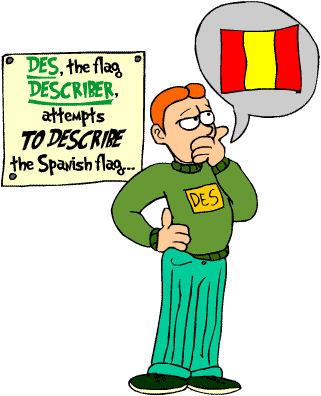
To remember this, imagine DES DESCRIBES the Spanish flag!
to describe

describir
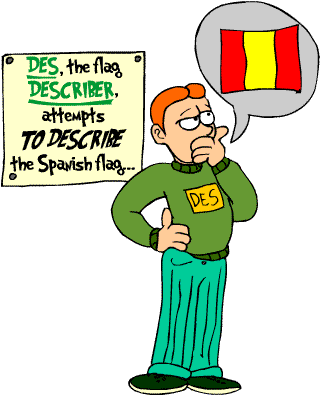
Sounds like “des / describes”, so imagine…
DES DESCRIBES the Spanish flag!
Around 250 verbs are conjugated like describir, and for the month of April a new regular IR verb is featured each day to enable you to consolidate the IR verb family. You will learn other verbs such as admitir, asistir, aplaudir, añadir,consumir and many others.
I find that the fastest and easiest way to learn REMEMBER new Spanish words is with memory trigger cartoon pictures. It makes them harder to forget.
Read on, below the DESCRIBIR verb table...(Note the two irregular past participles).
| VERB CONJUGATION TABLE DESCRIBIR - to describe | ||||||
|---|---|---|---|---|---|---|
| Simple Tenses - Spanish Verb describir | ||||||
| Tense | yo | tú | él | nosotros | vosotros | ellos |
| PresentPresentedescribe | describo | describes | describe | describimos | describís | describen |
| ImperfectImperfectodescribed | describía | describías | describía | describíamos | describíais | describían |
| PreteritPretéritodescribed | describí | describiste | describió | describimos | describisteis | describieron |
| FutureFuturowill describe | describiré | describirás | describirá | describiremos | describiréis | describirán |
| ConditionalCondicionalwould describe | describiría | describirías | describiría | describiríamos | describiríais | describirían |
| SubjunctiveSubjuntivomay describe | describa | describas | describa | describamos | describáis | describan |
| Imperfect SubjunctiveImperfecto de Subj.might describe | describiera | describieras | describiera | describiéramos | describierais | describieran |
| describiese | describieses | describiese | describiésemos | describieseis | describiesen | |
| Imperatives Spanish Verb describir - to describe | ||||||
| Imperative*Imperativodescribe! | – | describe! | describa! | describamos! | describid! | describan! |
| Negative Imperative*Imperativo Negativodon't describe! | – | no describas! | no describa! | no describamos! | no describáis! | no describan! |
| Compound Tenses of the Spanish Verb DESCRIBIR Past Participle: descrito or descripto - described | ||||||
| Present PerfectPerfecto de Indicativohave described | he descrito | has descrito | ha descrito | hemos descrito | habéis descrito | han descrito |
| Preterit PerfectPretérito Anteriorhad described | hube descrito | hubiste descrito | hubo descrito | hubimos descrito | hubisteis descrito | hubieron descrito |
| Past PerfectPluscuamperfectohad described | había descrito | habías descrito | había descrito | habíamos descrito | habíais descrito | habían descrito |
| Present Perfect SubjPresente Perfecto Subjmay have described | haya descrito | hayas descrito | haya descrito | hayamos descrito | hayáis descrito | hayan descrito |
| Future PerfectFuturo Perfectowill have described | habré descrito | habrás descrito | habrá descrito | habremos descrito | habréis descrito | habrán descrito |
| Conditional PerfectCondicional Perfectowould have described | habría descrito | habrías descrito | habría descrito | habríamos descrito | habríais descrito | habrían descrito |
| Pluperfect SubjunctivePluscuamperf. de sbjmight have described | hubiera descrito | hubieras descrito | hubiera descrito | hubiéramos descrito | hubierais descrito | hubieran descrito |
| hubiese descrito | hubieses descrito | hubiese descrito | hubiésemos descrito | hubieseis descrito | hubiesen descrito | |
| Progressive Tenses DESCRIBIR Present Participle: describiendo - describing | ||||||
| Present ProgressivePresente Progressivoam describing | estoy describiendo | estás describiendo | está describiendo | estamos describiendo | está describiendo | están describiendo |
| Preterit ProgressivePretérito Progwas describing | estuve describiendo | estuviste describiendo | estuvo describiendo | estuvimos describiendo | estuvisteis describiendo | estuvieron describiendo |
| Imperfect ProgressiveImperfecto Proghad been describing | estaba describiendo | estabas describiendo | estaba describiendo | estábamos describiendo | estabais describiendo | estaban describiendo |
| Future ProgressiveFuturo Perfecto Progwill be describing | estaré describiendo | estarás describiendo | estará describiendo | estaremos describiendo | estaréis describiendo | estarán describiendo |
| Conditional ProgressiveCondicional perf. prog.would have been ...ing | estaría describiendo | estarías describiendo | estabría describiendo | estaríamos describiendo | estaríais describiendo | estarían describiendo |
| Subjunctive ProgressiveSubjuntivo Progressivomay've been describing | que ~ describiendo | que ~ describiendo | que ~ describiendo | que ~ describiendo | que ~ describiendo | que ~ describiendo |
* No imperative for yo: commands are only given to the people you're talking to (or to “us”).
Red letters are irregular: where describir breaks the regular pattern.
MORE about the SPANISH VERB DESCRIBIR
USING the SPANISH VERB DESCRIBIR
Describir can also mean: to portray, to trace.
la descripción (nf)
description.
descriptivo/a (adj m/f)
descriptive.
Es muy dificíl describirla
It's very difficult to describe her.
¿Cómo describirás tu experiencia?
How will you describe your experience?

vos replaces tú - you, informal, singular -
- in Argentina, Uruguay, Paraguay and also in some countries of Central America.
Sometimes it also replaces the formal singular 'Usted'.
In regular IR verbs, the conjugations remain the same as for tú except for the addition of accents in the following tenses:
Presente: vos describís
Imperativo: ¡describí!
More Verbs like the Spanish verb DESCRIBIR - to describe
- There are many more Spanish Verb Tables like this one.
- You can more easily remember words and verbs like the Spanish for describe describir using the techniques of the world's Memory Masters.
MORE on SPANISH VERB, VOCAB and GRAMMAR LEARNING



ALSO ON SIMILAR SPANISH GRAMMAR TOPICS
Enjoy your Spanish verb describir learning.
Try 200 Words a Day
Learn Spanish words in minutes, not weeks
Memory triggers with pictures make new words stick much faster. 10 free lessons in every vocab course, no credit card needed.