
Spanish · word lesson
The verb in Spanish for say, to tell decir
4 min readto say, to tell

decir
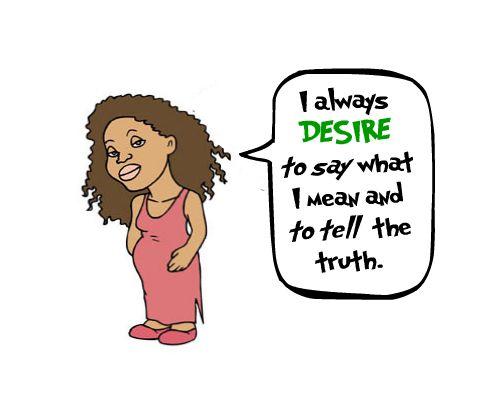
Sounds like “des'ree”, so imagine…
the singer DES'REE (f) always desires to tell the truth.
decir - Spanish for to say, to tell
... which sounds a bit like DESIRE ...
Imagine that DESIREE the singer, DESIRES to say what she means,
and to to tell the truth ....
With the 200 Words a Day system we give you a cartoon Memory Trigger of the verb to help you remember it quicker and easier.
Because the brain never forgets a picture, this makes the 'remembering process' a whole lot easier.
Below see all the conjugations for you of decir, the verb in Spanish for say, to say.
Each tense has a sample sentence with one of the verb conjugations in action. Read these all aloud, three times. You may also find it useful to write the tables of this very useful verb out in full!
Memorise it... then learn the conjugations in the various Spanish verb tenses.
It is from the same route word as the English word - discuss, discourse.
Present Participle
Past Participle
diciendo = saying
dicho = said
The past participle is highly important as it is used to form the various compound tenses, seven of which are used in modern Spanish conversation and writing. Check out the tenses in the tables below, and check out the sample sentences using the Spanish for say.
Verb decir fully conjugated. The Spanish for say, to tell
| Simple Tenses decir | ||||||
|---|---|---|---|---|---|---|
| Tense | yo | tú | él | nosotros | vosotros | ellos |
| PresentPresentesay | digo | dices | dice | decimos | decís | dicen |
| ImperfectImperfectosaid | decía | decías | decía | decíamos | decíais | decían |
| PreteritPretéritosaid | dije | dijiste | dijo | dijimos | dijisteis | dijeron |
| FutureFuturowill say | diré | dirás | dirá | diremos | diréis | dirán |
| ConditionalCondicionalwould say | diría | dirías | diría | diríamos | diríais | dirían |
| SubjunctiveSubjuntivomay say | diga | digas | diga | digamos | digáis | digan |
| Imperfect SubjunctiveImperfecto de Subjuntivomay say | dijera | dijeras | dijera | dijéramos | dijerais | dijeran |
| dijese | dijeses | dijese | dijésemos | dijeseis | dijesen | |
| Imperative Tenses decir | ||||||
| Imperative*Imperativosay! | – | ¡di! | ¡diga! | ¡digamos! | ¡decid! | ¡digan! |
| Negative Imperative*Imperativo Negativodon't say! | – | ¡no digas! | ¡no diga! | ¡no digamos! | ¡no digáis! | ¡no digan! |
| Compound Tenses decir - Past Participle dicho - said | ||||||
| Present PerfectPerfecto de Indicativohave said | he dicho | has dicho | ha dicho | hemos dicho | habéis dicho | han dicho |
| Preterit PerfectPretérito Anteriorhad said | hube dicho | hubiste dicho | hubo dicho | hubimos dicho | hubisteis dicho | hubieron dicho |
| Past PerfectPluscuamperfectohad said | había dicho | habías dicho | había dicho | habíamos dicho | habíais dicho | habían dicho |
| Present Perfect SubjunctivePresente perfectohave said | haya dicho | hayas dicho | haya dicho | hayamos dicho | hayáis dicho | hayan dicho |
| Future PerfectFuturo Perfectowill have said | habré dicho | habrás dicho | habrá dicho | habremos dicho | habréis dicho | habrán dicho |
| Conditional PerfectCondicional Perfectowould have said | habría dicho | habrías dicho | habría dicho | habríamos dicho | habríais dicho | habrían dicho |
| PluperfectPluscuamperfectomay have said | hubiera dicho | hubieras dicho | hubiera dicho | hubiéramos dicho | hubierais dicho | hubieran dicho |
| hubiese dicho | hubieses dicho | hubiese dicho | hubiésemos dicho | hubieseis dicho | hubiesen dicho | |
| Progressive Tenses: Present Participle diciendo - saying | ||||||
| Present ProgressivePresente Progressivoam saying | estoy diciendo | estás diciendo | está diciendo | estamos diciendo | estáis diciendo | están diciendo |
| Preterit ProgressivePretéritowas saying | estuve diciendo | estuviste diciendo | estuvo diciendo | estuvimos diciendo | estuvisteis diciendo | estuvieron diciendo |
| Imperfect ProgressiveImperfectowas saying | estaba diciendo | estabas diciendo | estaba diciendo | estábamos diciendo | estabais diciendo | estaban diciendo |
| Future ProgressiveFuturowill be saying | estaré diciendo | estarás diciendo | estará diciendo | estaremos diciendo | estaréis diciendo | estarán diciendo |
| Conditional ProgressiveCondicionalwould be saying | estaría diciendo | estarías diciendo | estaría diciendo | estaríamos diciendo | estaríais diciendo | estarían diciendo |
| Subjunctive ProgressiveSubjuntivomay be saying | esté diciendo | estés diciendo | esté diciendo | estemos diciendo | estéis diciendo | estén diciendo |
* No imperative for yo: commands are only given to the people you're talking to (or to “us”).
Example sentences
- Present indicative: Yo digo la casa es hermosa. = I say the house is beautiful.
- Imperfect indicative: Tu decías que la niña era linda. = You used to say that the girl was pretty.
- Preterit: Él dijo que la ropa estaba sucia. = He said that the clothes were dirty.
- Present subjunctive: Intentemos que ellosdigan el discurso. = (We intend) It is our intention that they present (say) the speech.
- Imperfect subjunctive –ra version: Si yo dijiera que Alemania es el mejor país, yo estaría loco. = If I (had) said that Germany is the best country, I would be mad.
- Imperfect subjunctive –se version: Si yo dijese que la escuela es una perdida de tiempo, yo estaría loco. = If I (had) said that school is a waste of time, I would be crazy.
- Future Perfect: Nosotros habremos dicho que estábamos perdidos. = We will have said that we were lost.
- Conditional Perfect: Tú habríasdicho eso si no sabías la verdad. = You would have said that if you didn’t know the truth.
- Present Perfect Subjunctive: Espero que ellos hayan dicho lo correcto. = I hope that they have said the right thing.
- Pluperfect Subjunctive Tense -ra version - Pluscuamperfecto de Subjuntivo: Yo hubiera dicho que el era inocente, si ustedes me hubiesen pagado. = I may had said that he was innocent, if you had paid me.
- Pluperfect Subjunctive Tense -se version: Yo hubiese dicho la verdad, si ustedes no me hubiesen golpeado. = I may had said the truth, if you hadn’t hit me.
Note: The Spanish upside down exclamation mark (¡) is required before a command/exclamation and a normal exclamation mark (!) following it.
¡Di a ellos que se callen!
Tell them to be quiet!
Notes and other meanings of decir, the verb in Spanish for say: to say
¡Porque lo digo yo! Because I say so! ¿Que dice?
What does it/he/she/you (form.sing) say? / What is he/she saying?
Decirle algo a algiuen.
To tell something to somebody
Decirle al oído a alguien.
to whisper in someone’s ear.
decirse to say ie. to oneself or to each other
¿Cómo se dice? = how do you say? Lit. how does one say?
¿Cómo se dice en español?
Also means to tell
Sabes qué me dijeron? Do you know what they told me?
to show, to reveal, to call
decir por decir = talking for talking's sake
querer decir - to mean
Quiero decir que ... I mean that ( I want to say that) ….
Es decir (que) = that’s to say (that) …
So to speak!
como quien dice so to speak / as they say
or
Por así decirlo. so to speak
¡No me digas! You don’t say! Really!?
¿Qué me dices?
What are you saying (to me)? / What are you telling me?
Dijo que sí. Dijo que no.
He/she said yes. He/she said no.
No digas esas cosas. Don’t say such things.
¡Y que lo digas! You bet!
¡Diga! ¡Dígame!
In a shop: Can I help you?
On the phone: Hello? (particularly in Spain)
un decir (m) a familiar saying, figuratively speaking.
Es un decir. = It’s a saying.
Dicho y hecho. – No sooner said than done.
decir as a suffix
These are all conjugated in exactly the same irregular way as the verb, decir.
bendecir - to bless or to say grace (before a meal)
contradecir(se) - to contradict (oneself)
desdecir de algo - to to deny, diminish something
Note: The prefix des = undo, diminish, deny
desdecirse - to go back on one’s word.
maldecir - to speak badly of, to curse.
predecir - to predict.
Remembering that the verb for to to say in Spanish is decir is made very easy with the 200 Words a Day superlearning systems.
Try 200 Words a Day
Learn Spanish words in minutes, not weeks
Memory triggers with pictures make new words stick much faster. 10 free lessons in every vocab course, no credit card needed.